
"coffee enzyme"
1000 article(s) found

Vietnamese civet coffee Vietnam begins to produce "civet" coffee
Vietnamese civet coffee is a scientific replica of Indonesian civet coffee. The Indonesian civet coffee is made by allowing a small local fox, the civet, to swallow a large amount of coffee beans, and the undigested coffee beans are excreted through the civets' digestive tract and detected one by one from the feces. The coffee made from this process has a strong flavor and is highly praised by connoisseurs, but once it is known

Vietnam began to produce "civet" coffee
Vietnamese civet coffee is a scientific replica of Indonesian civet coffee. The Indonesian civet coffee is made by allowing a small local fox, the civet, to swallow a large amount of coffee beans, and the undigested coffee beans are excreted through the civets' digestive tract and detected one by one from the feces. The coffee made from this process has a strong flavor and is highly praised by connoisseurs, but once it is known

What is wet coffee? Basic knowledge of introduction to Coffee
What is wet coffee? This kind of coffee is peeled and separated from the pulp when the beans are still wet. Most of the world's most famous coffee is wet-processed to strengthen its acidity. In traditional wet processing, the coffee skin is separated and the peeled coffee beans are placed in a container so that the enzyme loosens the sticky peel or mucus (fermentation), and then the loose fruit is washed.
Boutique coffee learn what is wet coffee
This kind of coffee is peeled and separated from the pulp when the beans are still wet. Most of the world's most famous coffee is wet-processed to strengthen its acidity. In traditional wet processing, the coffee skins are separated and the peeled coffee beans are placed in a container so that the enzyme loosens the sticky peel or mucus (fermentation), and the loose fruit is then washed off (washed).
Basic knowledge of boutique coffee what is wet coffee?
This kind of coffee is peeled and separated from the pulp when the beans are still wet. Most of the world's most famous coffee is wet-processed to strengthen its acidity. In traditional wet processing, the coffee skins are separated and the peeled coffee beans are placed in a container so that the enzyme loosens the sticky peel or mucus (fermentation), and the loose fruit is then washed off (washed).

Boutique coffee knowledge what is wet coffee?
This kind of coffee is peeled and separated from the pulp when the beans are still wet. Most of the world's most famous coffee is wet-processed to strengthen its acidity. In traditional wet processing, the coffee skins are separated and the peeled coffee beans are placed in a container so that the enzyme loosens the sticky peel or mucus (fermentation), and the loose fruit is then washed off (washed).

What is wet coffee? Basic knowledge of boutique coffee
This kind of coffee is peeled and separated from the pulp when the beans are still wet. Most of the world's most famous coffee is wet-processed to strengthen its acidity. In traditional wet processing, the coffee skins are separated and the peeled coffee beans are placed in a container so that the enzyme loosens the sticky peel or mucus (fermentation), and the loose fruit is then washed off (washed).

Boutique Coffee what is wet coffee?
This kind of coffee is peeled and separated from the pulp when the beans are still wet. Most of the world's most famous coffee is wet-processed to strengthen its acidity. In traditional wet processing, the coffee skins are separated and the peeled coffee beans are placed in a container so that the enzyme loosens the sticky peel or mucus (fermentation), and the loose fruit is then washed off (washed).

Coffee fermentation
Coffee fermentation is one of the most important steps in wet processing of coffee, which is related to the quality of coffee. Many people will ask what is the reason for fermentation? This problem is generally said to be for degumming; in fact, the mucus on the endocarp of coffee is an organic substance composed of sugar, enzyme, propectin and pectin, which can be dissolved by natural fermentation by bacteria and is easy to wash off.

Coffee has antibacterial activity.
Helicobacter pylori (helicobacter pylori,HP) is a gram-negative anaerobes that grows between the mucous layer of the stomach and duodenum and mucosal cells. It can produce a variety of enzymes and cytotoxins, resulting in mucosal damage.

Ceramic coffee roaster
Coffee roasting (coffee roasting) means that through heating raw beans, starch in raw beans is converted into sugars and acids at high temperature, substances such as cellulose will be carbonized to varying degrees, water and carbon dioxide will be volatilized, proteins will be converted into enzymes and fats, and the remaining substances will be combined to form an oil film on the surface of coffee beans, and in the process coffee acids will be formed.

The latest US research: drinking coffee can protect the liver
A new study has found that drinking coffee is good for the liver, even decaffeinated coffee has a protective effect, according to the US Health Day website. Researchers at the National Cancer Institute surveyed 28000 people over the age of 20. On the one hand, the researchers analyzed their coffee consumption habits in detail; on the other hand, the researchers tested the blood and liver health of the subjects.
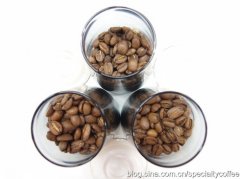
Dried coffee beans
Sun-cured coffee beans are more acidic than water-washed beans, especially aminobutyric acid, but water-washed coffee is often sour in the sun. This is because coffee beans are dehydrated for a long time in the process of sun drying, and enzymes decompose glutamic acid into aminobutyric acid. Although the content of aminobutyric acid in washed beans is lower than that in sun-dried beans, but citric acid, acetic acid and other acid mouth
Drinking coffee can reduce the risk of liver cancer
Italian expert Weikia pointed out that the greatest advantage of coffee is that it can reduce the chance of developing diabetes. Diabetes is the main cause of liver disease. At the same time, coffee is beneficial to the control of liver enzymes and liver cirrhosis. At present, the known causes of liver cancer are mainly caused by chronic hepatitis B and C. In addition, alcohol, smoking, obesity and diabetes are all causes of liver cancer. Current methods of prevention

Why is whole milk easier to make coffee foam?
Milk fat exists in a small crystal ball coated with a thin film of protein and fat, and the film of each crystal ball can prevent the crystal balls from colliding with each other and form a larger fat bubble. In addition, the film protects the crystal ball from being digested by enzymes, making the milk less sweet or not sweet at all. During the heating process, the weight of the protein in the milk increases, making the milk thicker.

Coffee drawing skills whole milk is easier to foam.
Milk fat exists in a small crystal ball coated with a thin film of protein and fat, and the film of each crystal ball can prevent the crystal balls from colliding with each other and form a larger fat bubble. In addition, the film protects the crystal ball from being digested by enzymes, making the milk less sweet or not sweet at all. During the heating process, the weight of the protein in the milk increases, making the milk thicker.
Fine Coffee: why whole milk is easier to foam
Milk fat exists in a small crystal ball coated with a thin film of protein and fat, and the film of each crystal ball can prevent the crystal balls from colliding with each other and form a larger fat bubble. In addition, the film protects the crystal ball from being digested by enzymes, making the milk less sweet or not sweet at all. During the heating process, the weight of the protein in the milk increases, making the milk thicker.
Coffee common sense why whole milk is easier to foam.
Milk fat exists in a small crystal ball coated with a thin film of protein and fat, and the film of each crystal ball can prevent the crystal balls from colliding with each other and form a larger fat bubble. In addition, the film protects the crystal ball from being digested by enzymes, making the milk less sweet or not sweet at all. During the heating process, the weight of the protein in the milk increases, making the milk thicker.